Your First Fertility Pelvic Floor Therapy Visit: What We Look At and Why
If you are trying to conceive, you have probably had more appointments than you can count, most of them about numbers. This one is about your body — how your pelvis, abdomen and nervous system are working — and how we can support what your fertility team is already doing.
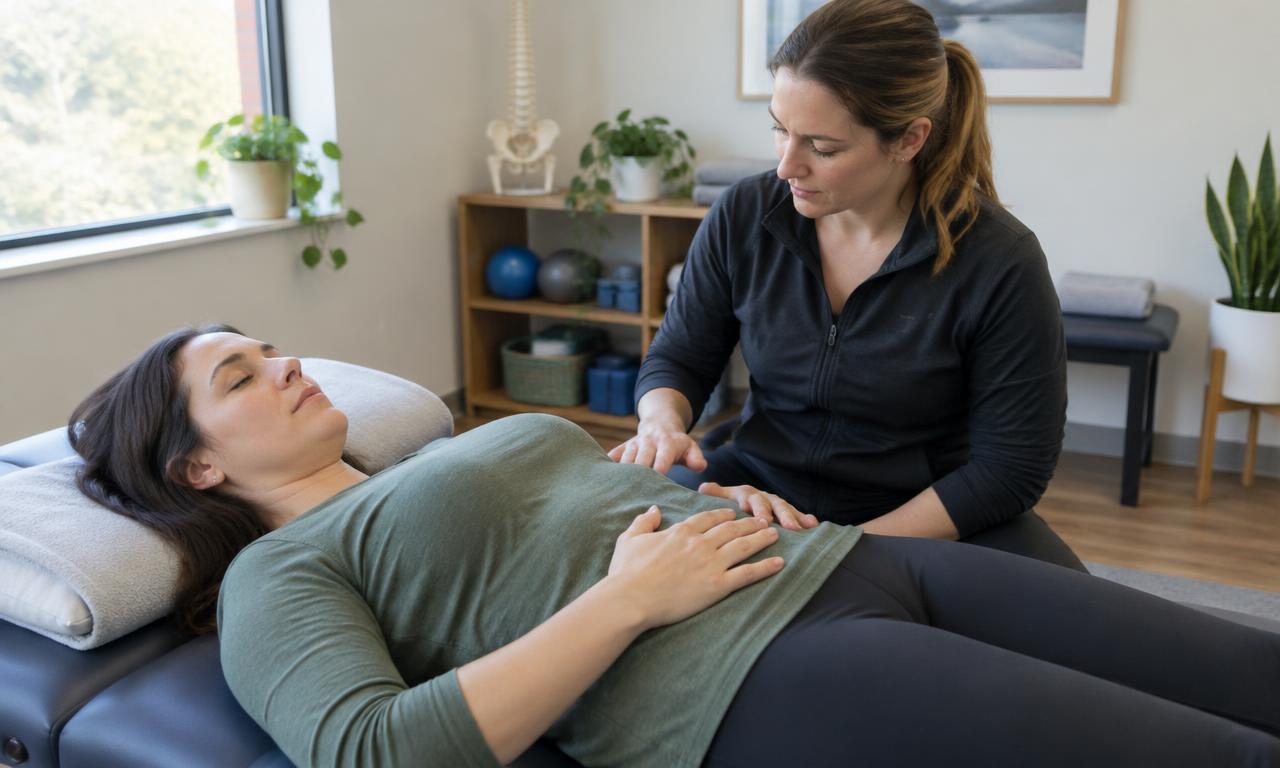
A long, unhurried history
I ask about your cycle, pain with periods or intercourse, past surgeries, endometriosis or PCOS, bowel and bladder habits, previous pregnancies or losses, and where you are in treatment — natural cycles, IUI, IVF, or a transfer coming up. It helps to bring dates. It is fine if this part is emotional.
What the assessment includes
- Breathing, posture and how pressure moves through your abdomen and pelvis
- Abdominal and pelvic tissue mobility, including scar tissue from C-sections or laparoscopies
- Gentle visceral and lymphatic work to assess how freely the organs and fluid move
- Pelvic floor tone, assessed externally or internally — internal only with your consent
My fertility training includes PRFS, Fertility Rehab Levels 1 and 2, The Infertility Protocol, and Lymph Drainage and Vascular Release for the Pelvic Floor Therapist.
Timing around your cycle and treatment
We plan sessions around your symptoms and your fertility clinic’s instructions. Treatment timing and techniques are individual, including before or after retrieval and transfer. I coordinate with your reproductive endocrinologist so pelvic care supports your medical plan.
What you leave with
An explanation of what I found, simple daily work you can do at home when appropriate, and a session plan that fits your timeline. Pelvic floor therapy supports comfort and function alongside medical fertility care. It does not promise conception, implantation, or pregnancy.