
Does Any of This Sound Familiar?
Most men come to me with one of these, usually after a year or more of quietly managing it.
Leaking after prostate surgery
Dribbling when you stand, cough, lift or golf, months after the operation.
Often treatable in weeks, not years, with the right training.
Pain you can't pin down
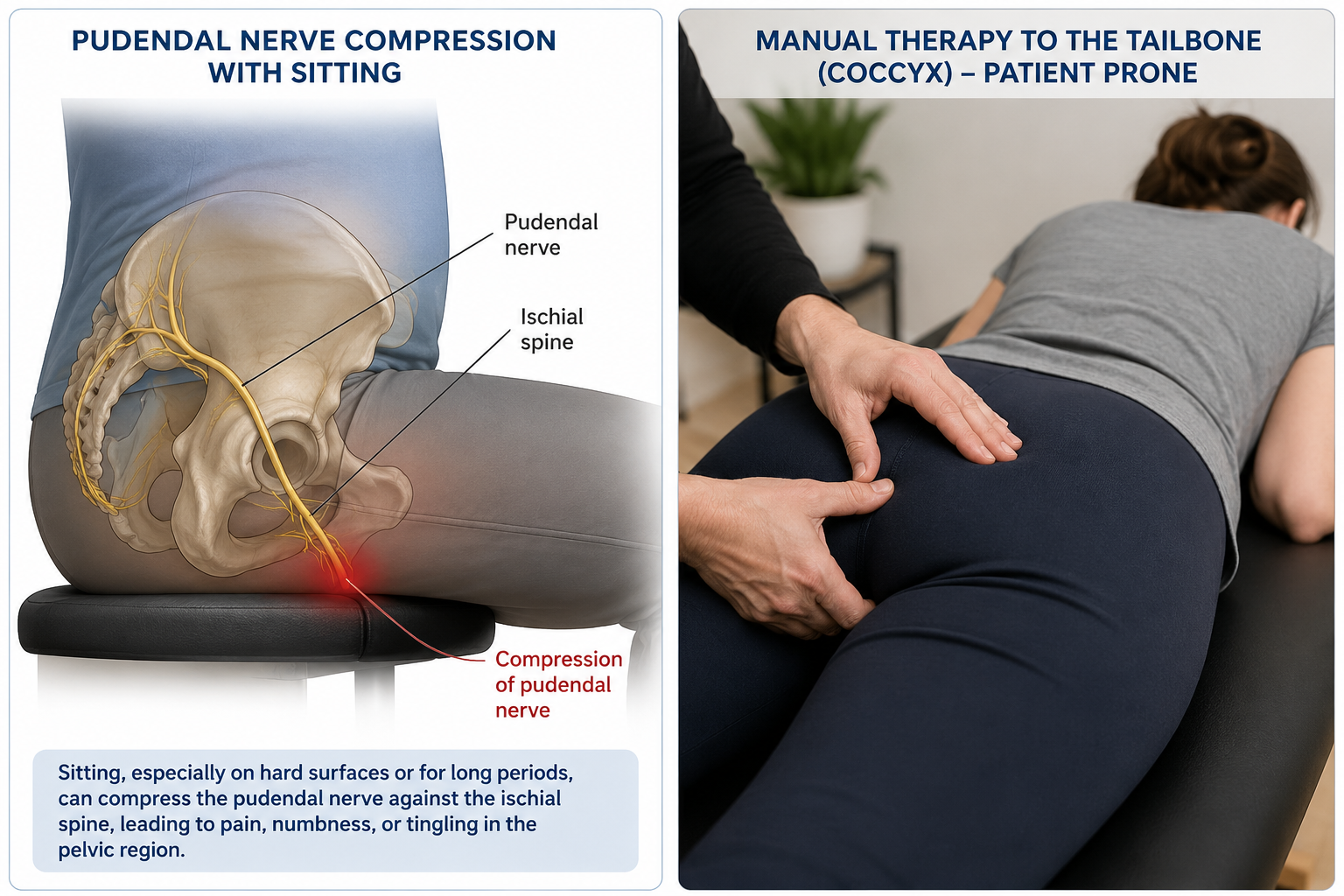
Aching in the perineum, testicles, tip of the penis or tailbone, often worse sitting.
Frequently a muscle problem, not a prostate problem.
"Prostatitis" that antibiotics didn't fix
Negative cultures, several rounds of antibiotics, same symptoms.
If antibiotics didn't change it, it probably was never bacterial.
Urgency, frequency or a slow stream
Rushing to the bathroom, getting up at night, or never feeling fully empty.
The pelvic floor plays a bigger role here than most men are told.
Pain with or after ejaculation
Discomfort during orgasm or an ache that lingers for hours or a day.
A tight pelvic floor is a common, treatable cause.
Erectile or bowel changes
Weaker erections, straining, constipation or bowel urgency.
These muscles support both, and they can be retrained.
Not sure if this is you?
Take the free 2-minute screening. It's private, nothing is stored, and you don't have to call anyone.
Take the free screeningPost-Surgical Recovery
Leaking after prostate surgery is common, and it is trainable. Coming in before surgery helps even more.
- • Post-prostatectomy incontinence rehabilitation
- • Post-prostatectomy treatment for arousal incontinence
- • Post-prostatectomy climacturia management
- • Post-surgical pelvic pain treatment
- • Post-surgical pelvic floor strengthening
- • Recovery optimization protocols
- • Return to normal activities guidance
Chronic Pain Management
Pelvic, genital or tailbone pain that has hung around, often after rounds of antibiotics that didn't change anything.
- • Chronic pelvic pain syndrome treatment
- • Chronic prostatitis management
- • Pelvic floor muscle dysfunction
- • Tailbone pain relief
- • Post-surgical pain management
- • Pudendal Neuralgia
Sexual Health Support
Erections and ejaculation depend on these muscles too. When they're too tight or too weak, sexual function changes.
- • Erectile dysfunction supportive therapy
- • Premature ejaculation management
- • Sexual pain disorders
- • Peyronie's disease
My Treatment Approach
Most men I see have been told it's "the prostate." Very often, it's the muscles around it. Here's how I explain it in the room: pick up a five-pound weight and your biceps tightens. Put it down and the muscle should go soft again. If it stays tight after you've put the weight down, that's what we call hypertonicity. A pelvic floor that never lets go causes pain, urgency, constipation, and sexual symptoms. And a muscle that is always tight is not a strong muscle, which is why it can also leak or feel weak.
So the plan goes in order. First we calm the muscle down with manual therapy, breathing, and relaxation work until it is soft and doesn't hurt to touch. Then we strengthen. If we strengthen a muscle that's already clenched, it just gets tighter and more painful. After prostate surgery it's often the other way around, and we start building strength and timing early.
I use RUSI-guided biofeedback (real-time ultrasound) so you can watch your pelvic floor contract and relax on a screen. For most men it's the moment it finally makes sense, because you can't see these muscles any other way.
See real ultrasound biofeedback in action on Instagram @pelvicptplusI also look at your back, hips, ribs and breathing, because your pelvic floor doesn't work alone. If you sit at a desk all day, we'll talk about that too.
What to Expect
We talk first
A full hour, one-on-one, in a private room. Bladder, bowel, pain, sex, work, training. I ask direct questions because the details matter, and nothing you tell me will be new to me.
I explain before I examine
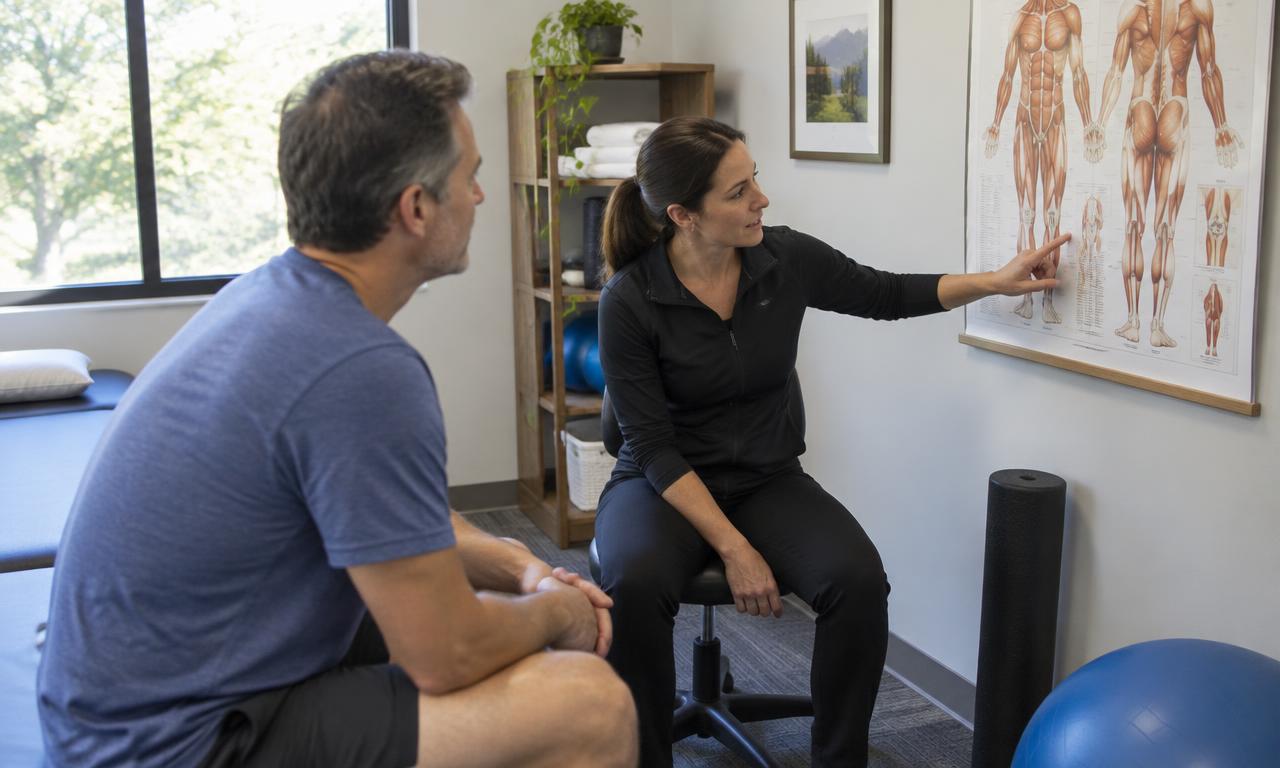
I'll show you on a pelvis model what I'm checking and why: spine, hips, abdomen, and the pelvic floor. An internal rectal assessment is the most accurate way to check these muscles, and it is always your choice. If you'd rather not, we work externally and with ultrasound.
You leave with a short plan
I could give you twenty exercises. You'll get two or three, done properly, that fit your day. We adjust every visit based on how you're responding.
You Don't Have to Keep Managing This Quietly
Most men wait a year or more before they come in. Symptoms that have been there a long time still get better; they just take a little longer. If you have questions first, call. That's what most people do.
Free Guides You Can Start Using Today
Tell us where to send it and the PDF is yours right away — it downloads instantly and lands in your inbox too.
Be the Bladder Boss
Practical strategies and exercises to help you regain bladder control and confidence in your daily life.
Combatting Constipation
Evidence-based tips and techniques for improving bowel function and reducing straining.
Diastasis Recti: Not Just a Women's Issue
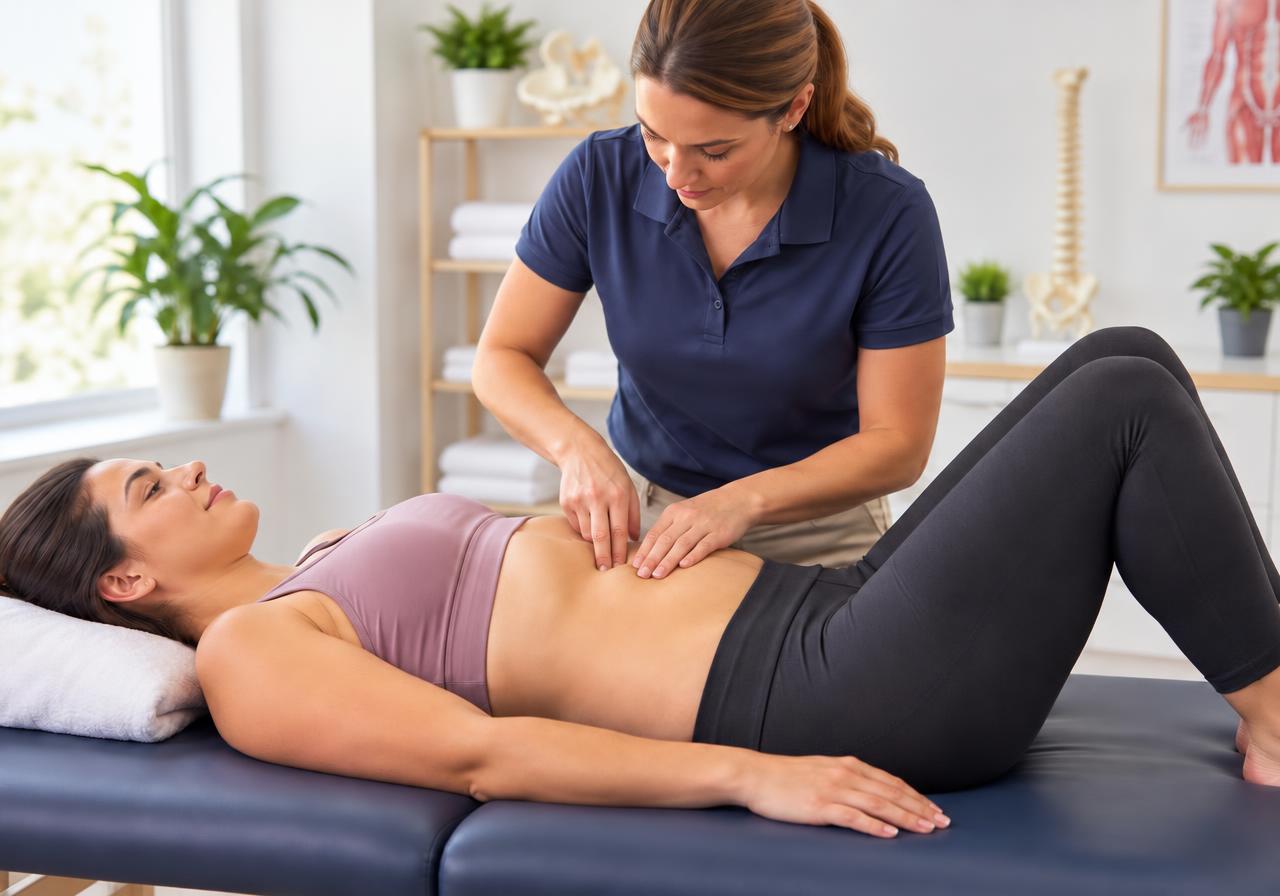
DRA is often dismissed as a postpartum or women's condition — but men develop it too. Read how we measure the gap and treat it.
Did you know? DRA is usually thought of as a postpartum or women's issue, but it's very common in men too — especially after weight gain, heavy lifting, or chronic straining. Pelvic floor physical therapy treats DRA successfully in men as well as women.

Transparent, Patient-First Billing
We are an out-of-network practice so we can give you the bespoke, one-on-one care you deserve — without insurance dictating your treatment.
Payment Accepted
Cash, credit card, HSA, and FSA.
Superbill Provided
Submit to your insurance for out-of-network reimbursement.
No Referral Needed
NJ direct access — book directly without a physician referral.
What Patients Say
So grateful to be under the care of Dr Tanvi. A skilled diagnostician - took time to understand symptoms, asked great questions and developed a tailored action plan. The treatment sessions have been equally thorough and Dr Tanvi uses a multimodal approach with real-time feedback. Thank you so much for your expertise and for caring hard for your patients. Highly recommend
— ASH, Google review
I highly recommend Dr. Tanvi. Her PT plan has been the most effective of any I've tried. The custom-tailored treatment and growing library of exercises, each thoughtfully added at my pace, have really improved things for me. She's clearly invested in her work, which keeps me invested too.
— AH, Google review
We have been to multiple Pelvic Floor Therapists and Tanvi is at an entirely different level. She knows EVERYTHING that can impact the pelvic floor. She uses ultra sound so you can see the muscles inside your body move and ultimately help you impact the movement better. I have seen real improvements in my pelvic floor which have impacted so much more than just the issue I went there for. I never realized how much your pelvic floor muscles impact your whole body. In addition, she is also, funny, kind and completely non judgmental. The perfect person to deal with for such an intimate issue. I recommend her highly!
— R.R., Google review
Probably the only PT — or even physician — I have ever been to who approaches chronic pain holistically. Mine is multifaceted, with multiple causes including stress, chronic tension, and postural issues, and Dr. Tanvi has been an invaluable guiding force where most other physical therapists fall short. If you're dealing with complex issues, a few visits with her will save you an immense amount of time, effort, and money.
— C.R., Google review
She is highly knowledgeable and demonstrates a strong clinical understanding of pelvic floor dysfunction. From the first session, she thoroughly assessed my symptoms and clearly explained the treatment approach. Her bedside manner is exceptional — professional, compassionate, and respectful — which matters so much when addressing sensitive pelvic health concerns.
— K.D., Google review
Related Conditions for Men
Research and further reading
Conservative care for urinary incontinence after prostate surgery
This review included 25 studies involving 3,079 men. It examined pelvic floor training, biofeedback and other nonsurgical approaches after prostate surgery.
The authors found uncertain evidence for pelvic floor training with biofeedback; combined interventions may make little difference to some outcomes. Recovery can also occur naturally. These results do not support a guaranteed continence outcome or timeline.
Johnson EE et al. Cochrane Database Syst Rev. 2023;4:CD014799.Manual therapy and relaxation for chronic pelvic pain in men
In a report involving 138 men whose chronic pelvic pain had not responded to usual treatment, many reported improvement after a program combining myofascial trigger-point release and relaxation training.
There was no control group, so the report cannot establish how much improvement was caused by treatment. It evaluated a specific combined program, not a guaranteed result from manual therapy alone.
Anderson RU, Wise D, Sawyer T, Chan C. J Urol. 2005;174:155–160.Related Articles
Learn more about this condition from our blog

Contact Us
Schedule Your Consultation
Experience the benefits of pelvic floor physical therapy in Montclair, New Jersey with real-time ultrasound biofeedback. Our pelvic floor therapist is here to help you reach your goals.
Our Location
209 Cooper Ave, Suite 5BCD
Upper Montclair, NJ 07043
Office Hours
- Sunday
- Closed
- Monday
- 3:00pm – 6:00pm
- Tuesday
- 9:00am – 12:00pm, 12:30pm – 5:30pm
- Wednesday
- Optional times available on request
- Thursday
- 9:00am – 12:00pm, 12:30pm – 5:30pm
- Friday
- Closed
- Saturday
- 10:00am – 2:00pm
Contact Info
- (908) 955-3534
- Fax: (844) 306-0840
- info@pelvicptplus.com
Looking for Pelvic Floor Therapy Near Me in Northern New Jersey?
Pelvic PT Plus is a dedicated pelvic health center in Upper Montclair, offering pelvic health physical therapy to patients throughout Essex, Passaic, and Morris counties.
Can't find your town? We welcome patients from across Northern NJ. Call us to learn more.
What You Can Expect From Us
You are heard.
A full hour, one-on-one with Dr. Tanvi. Your story matters, and you will never feel rushed.
You understand your body.
We explain what is happening in plain language, so you know why each step of your plan matters.
Care that looks deeper.
We look at you as a whole person, not a list of symptoms, and work toward the root cause.
"She looks at the whole person and what may be the root cause of pain not just treating the symptoms."