What to Expect at Your First Men's Pelvic Floor Therapy Visit
Most men put off this appointment because they do not know what it involves. Fair enough. Here it is, start to finish, with no surprises.
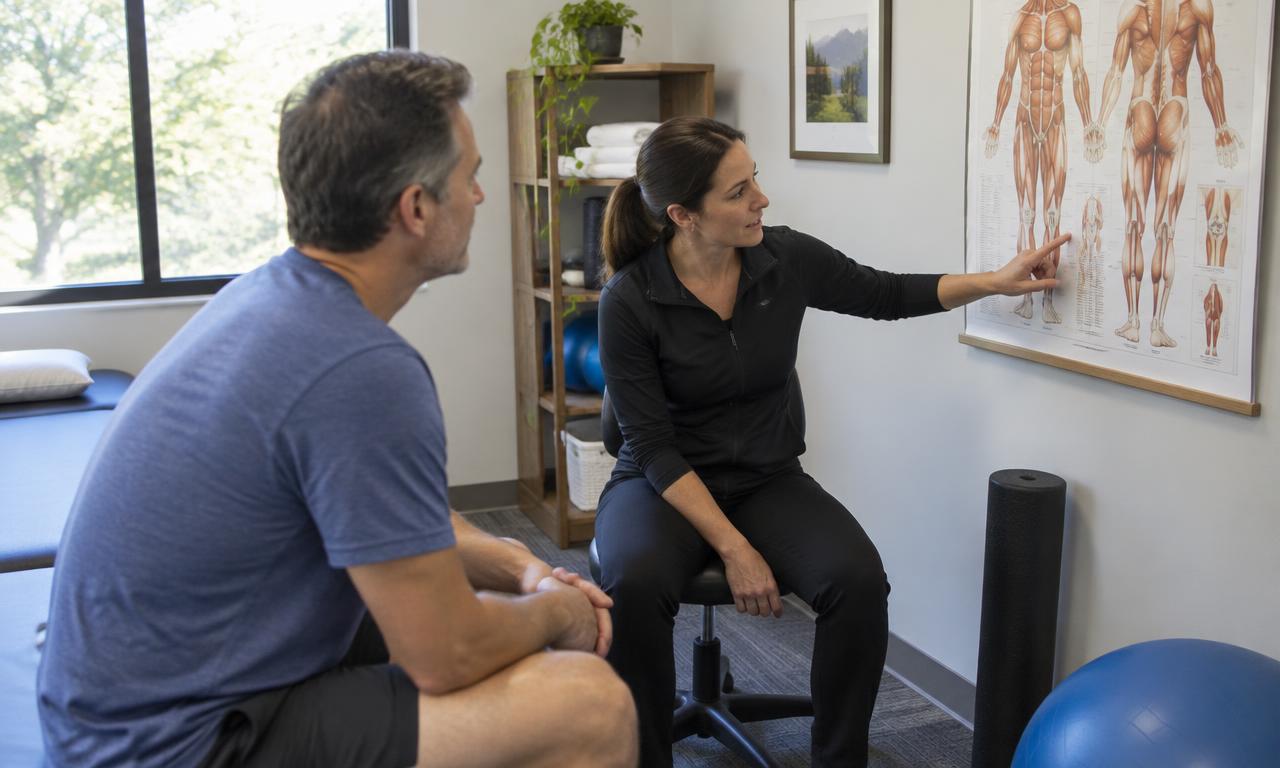
It starts with a conversation, fully clothed
The first twenty minutes or so is talking. Bladder, bowel, pain, sexual function, work, training, sleep, stress. I ask direct questions because the details matter, and nothing you say will be new to me. Leaking after prostate surgery, pain after ejaculation, a burning perineum after a long day at a desk — I hear these every week.
The physical assessment
- How you breathe, brace and lift — a lot of male pelvic floor problems come from gripping
- Hips, low back, abdomen and the tissue around the groin
- Real-time ultrasound (RUSI) as biofeedback, so you can see your pelvic floor contract and relax on screen
- An optional internal rectal assessment, which is the most accurate way to check tone and strength
The internal assessment is always your choice. I will explain what it tells us and why I might recommend it. If you would rather not, we work externally and with imaging, and treatment still moves forward.
Leaking vs. tightness — why it matters
A weak pelvic floor and an overactive one can produce similar symptoms but need opposite treatment. Doing more Kegels on a pelvic floor that is already clenched usually makes pain worse. Sorting out which one you have is the main job of the first visit.
What you leave with
A plain-language explanation, two or three exercises done correctly (not a sheet of twenty), and a realistic timeline. After prostatectomy, many men see meaningful change within weeks of consistent, correctly performed training.
Men's pelvic health in Upper Montclair
Private room, full-hour one-on-one appointments, no referral needed. Easy to reach from Montclair, Bloomfield, Verona, Cedar Grove, Nutley and the rest of Essex County.