Pudendal Neuralgia: What is it, Why it Hurts, and how can Pelvic Floor Physical Therapy help?
Learn about pudendal neuralgia and burning pelvic pain, what a pelvic floor assessment looks for, and how treatment may address contributing muscle tension.
Pudendal Neuralgia, Burning Pelvic Pain & Pelvic Floor Dysfunction in New Jersey
If you are experiencing burning pelvic pain, pain when sitting, rectal pressure, genital burning, tailbone pain, or pelvic nerve pain, you may have been told everything looks “normal” despite ongoing symptoms.
Many people searching for answers online type phrases like:
- “Why does sitting hurt my pelvis?”
- “Urethra burning but no infection”
- “Pain in penis when sitting”
- “Burning vulvar pain”
- “Golf ball feeling in rectum”
- “Pelvic pain specialist near me”
- “Pelvic floor PT near me”
For many patients, these symptoms may be related to pudendal neuralgia, pelvic floor dysfunction, chronic pelvic pain, or pelvic nerve irritation.
At Pelvic PT Plus in Upper Montclair, NJ , we provide specialized pelvic floor physical therapy for men and women experiencing pelvic pain, pelvic nerve symptoms, painful sitting, genital pain, bowel dysfunction, bladder symptoms, and pelvic floor tightness throughout the Montclair and Northern New Jersey area.
Pelvic PT Plus in Upper Montclair, NJ
Why Does Sitting Hurt My Pelvis?
Pain that worsens with sitting and improves with standing or lying down is commonly associated with pudendal neuralgia, pelvic floor dysfunction, pelvic nerve irritation, or chronic pelvic pain syndrome.
Patients often describe:
- Burning pelvic pain
- Tingling in the genital region
- Rectal pressure
- Tailbone pain when sitting
- A “golf ball” feeling in the rectum
- Pain in the penis when sitting
- Clitoral pain
- Vulvar burning
- Perineal pain
- Numbness or irritation with prolonged sitting
Many patients feel confused about fertility, pelvic pain, or bladder symptoms because imaging and testing may appear normal despite persistent symptoms.
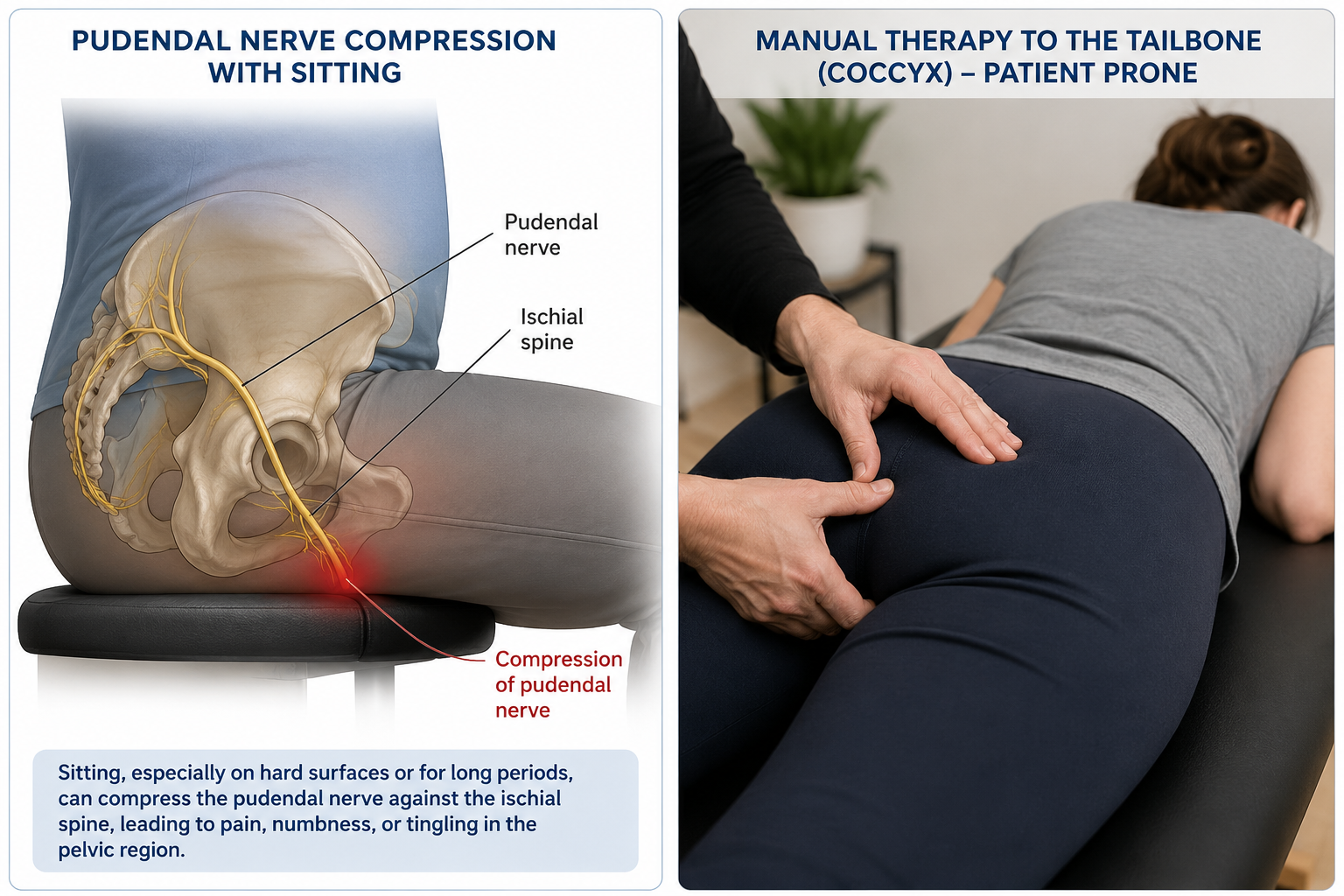
The pudendal nerve travels through the pelvis and can become irritated by chronic pelvic floor muscle tension, orthopedic dysfunction, prolonged sitting, cycling, trauma, surgery, childbirth, or chronic stress patterns.
What Is Pudendal Neuralgia?
Pudendal neuralgia is a condition involving irritation or sensitivity of the pudendal nerve, which supplies areas of the pelvis including the rectum, perineum, vulva, clitoris, penis, and pelvic floor muscles.
Patients may experience:
- Burning pelvic pain
- Genital nerve pain
- Pelvic pain after cycling
- Pain after ejaculation
- Pain after orgasm
- Urethra burning but no UTI
- Pelvic pressure
- Pain with sitting
- Pelvic floor tightness
- Chronic pelvic pain
- Sexual dysfunction
- Difficulty tolerating prolonged sitting
Symptoms may fluctuate and are often worsened by stress, prolonged sitting, constipation, pelvic floor overactivity, or orthopedic dysfunction involving the hips, spine, sacrum, or tailbone.
Burning Pelvic Pain But No Infection?
One of the most common complaints patients report is:
“I feel burning, but all my tests are normal.”
Patients frequently describe:
- Urethra burning but no infection
- Burning vulvar pain
- Rectal burning
- Genital tingling
- Pelvic pressure
- Tailbone discomfort
- Pain after sitting too long
Many patients are repeatedly treated for UTIs, prostatitis, yeast infections, or hemorrhoids before realizing the pelvic floor and nervous system may actually be contributing to symptoms.
Chronic pelvic floor tension can irritate nerves and surrounding tissues, creating symptoms that feel electrical, burning, aching, tingling, or hypersensitive.
Golf Ball Feeling in Rectum: Could It Be Pelvic Floor Dysfunction?
A “golf ball feeling” in the rectum is one of the most common descriptions associated with pelvic floor dysfunction and chronic pelvic muscle tension.
Patients may feel:
- Constant rectal pressure
- Incomplete emptying
- Tightness in the pelvic floor
- Pain with sitting
- Tailbone pressure
- Difficulty relaxing during bowel movements
This sensation is commonly associated with overactive pelvic floor muscles and chronic guarding patterns.
At PelvicPTplus Pelvic Floor Therapy , pelvic floor physical therapy focuses on restoring muscle coordination, improving relaxation, reducing nerve irritation, and improving pelvic mobility.
PelvicPTplus Pelvic Floor Therapy
Pain in Penis When Sitting & Male Pelvic Floor Dysfunction
Men with pelvic floor dysfunction are frequently misdiagnosed with chronic prostatitis despite normal testing.
Common symptoms include:
- Pain in penis when sitting
- Burning after ejaculation
- Rectal pressure male
- Hard flaccid symptoms
- Testicular pain
- Pelvic nerve pain
- Urinary urgency
- Pain after orgasm
- Urethral irritation
- Pelvic floor tightness
Many men are never told that pelvic floor dysfunction can mimic prostate, bladder, or nerve-related conditions.
Pelvic floor PT for men focuses on addressing pelvic muscle overactivity, orthopedic dysfunction, breathing mechanics, nervous system regulation, and pelvic pain patterns.
Clitoral Pain, Vulvar Burning & Female Pelvic Floor Dysfunction
Women with pudendal neuralgia or pelvic floor dysfunction may experience:
- Clitoral pain
- Burning vulvar pain
- Pain with sitting female
- Painful intercourse
- Pelvic heaviness
- Vaginal burning but no infection
- Tailbone pain
- Endometriosis and pelvic floor dysfunction
- Pelvic pain after childbirth
These symptoms are often associated with chronic pelvic floor guarding, nerve irritation, scar tissue restrictions, endometriosis, or postpartum pelvic floor dysfunction.
Many women are told symptoms are “hormonal,” anxiety-related, or unexplained when the pelvic floor itself may be contributing significantly to pain.
Pelvic Pain After Cycling, Exercise or Long Sitting
Cycling, prolonged sitting, weightlifting, chronic stress, and orthopedic dysfunction can all contribute to pelvic floor overactivity and pudendal nerve irritation.
Patients commonly notice:
- Numbness after cycling
- Burning after exercise
- Tailbone pain sitting
- Pelvic pressure during workouts
- Hip tightness
- Pelvic floor spasms
- Increased symptoms after travel or desk work
Treatment often includes both pelvic floor rehabilitation and orthopedic assessment of the hips, lumbar spine, SI joints, breathing mechanics, posture, and movement patterns.
What a Pelvic Floor Assessment Adds to Pelvic Nerve Pain Care
Many patients undergo years of testing before anyone evaluates:
- Pelvic floor muscle tension
- Breathing mechanics
- Orthopedic pelvic dysfunction
- Scar tissue mobility
- Nervous system dysregulation
- Chronic muscle guarding
- Core pressure management
- Hip and tailbone mechanics
Pelvic pain can have several contributors: muscles, nerves, connective tissue, joints, movement, and a sensitive nervous system. I assess those alongside your medical history and coordinate with your other providers when needed.
This is why pelvic floor physical therapy is often part of a more comprehensive treatment approach for pudendal neuralgia and chronic pelvic pain.
Can Pelvic Floor Physical Therapy Help Pudendal Neuralgia?
Pelvic floor physical therapy may help reduce symptoms associated with:
- Pudendal neuralgia
- Burning pelvic pain
- Pelvic floor dysfunction
- Pain when sitting
- Pelvic nerve irritation
- Chronic pelvic pain
- Genital burning
- Tailbone pain
- Painful intercourse
- Pain after ejaculation
- Bladder urgency and pelvic pressure
Treatment at Pelvic PT Plus in Montclair, NJ may include:
Pelvic PT Plus in Montclair, NJ
- Pelvic floor muscle assessment
- Myofascial release
- Nerve mobility treatment
- Breathing retraining
- Real-time ultrasound imaging
- Orthopedic pelvic rehabilitation
- Core coordination training
- Scar tissue mobilization
- Nervous system downregulation
- Tailbone and hip treatment
Treatment is individualized and designed to address the entire pelvic system — not just isolated symptoms.
Frequently Asked Questions About Pudendal Neuralgia & Pelvic Floor Dysfunction
Why does sitting make pelvic pain worse?
Sitting increases pressure around the pelvic floor, tailbone, and pudendal nerve, which may aggravate irritated tissues and increase symptoms.
Can pelvic floor dysfunction cause burning?
Yes. Pelvic floor muscle overactivity and nerve irritation may contribute to burning pelvic pain, urethral burning, rectal burning, genital tingling, or vulvar discomfort.
Can men have pelvic floor dysfunction?
Absolutely. Men commonly experience pelvic floor dysfunction symptoms including penile pain, rectal pressure, urinary urgency, pain after ejaculation, and pelvic nerve pain.
Is pudendal neuralgia the same as pelvic floor dysfunction?
Not always. However, pudendal neuralgia and pelvic floor dysfunction are often closely connected and may occur together.
Can pelvic floor physical therapy help pudendal neuralgia?
Pelvic floor PT may help reduce muscle tension, improve mobility, reduce nerve irritation, improve breathing mechanics, and restore pelvic floor coordination.
Pelvic Floor PT Near Me for Pudendal Neuralgia in New Jersey
Pelvic PT Plus in Upper Montclair, NJ 07043 provides specialized one-on-one pelvic floor rehabilitation for men and women with chronic pelvic pain, pudendal neuralgia, pelvic nerve irritation, bladder symptoms, bowel dysfunction, pregnancy pelvic pain, postpartum pelvic floor dysfunction, and orthopedic pelvic conditions.
Pelvic PT Plus in Upper Montclair, NJ 07043
You do not have to keep living with pelvic pain that nobody can explain. Your symptoms are real, your pelvic floor matters, and treatment options exist.