Your Child's First Pelvic Floor Therapy Visit: What Actually Happens
Most parents who call me have been told to "wait it out." By the time you book, you have probably tried sticker charts, more fiber, fewer drinks after dinner. Here is exactly what the first visit looks like, so neither you nor your child walks in guessing.
Before you come in
I will ask you to fill out a short history form and, if you can, keep a two- or three-day bladder and bowel diary: when your child drinks, when they pee, when they poop, and any accidents. It does not need to be perfect. Even a rough log tells me more than any single question can.
Tell your child, in simple terms, that they are going to see someone who helps kids with their bladder and tummy, and that it is mostly talking and playing. No shots, no needles.
The first part is a conversation
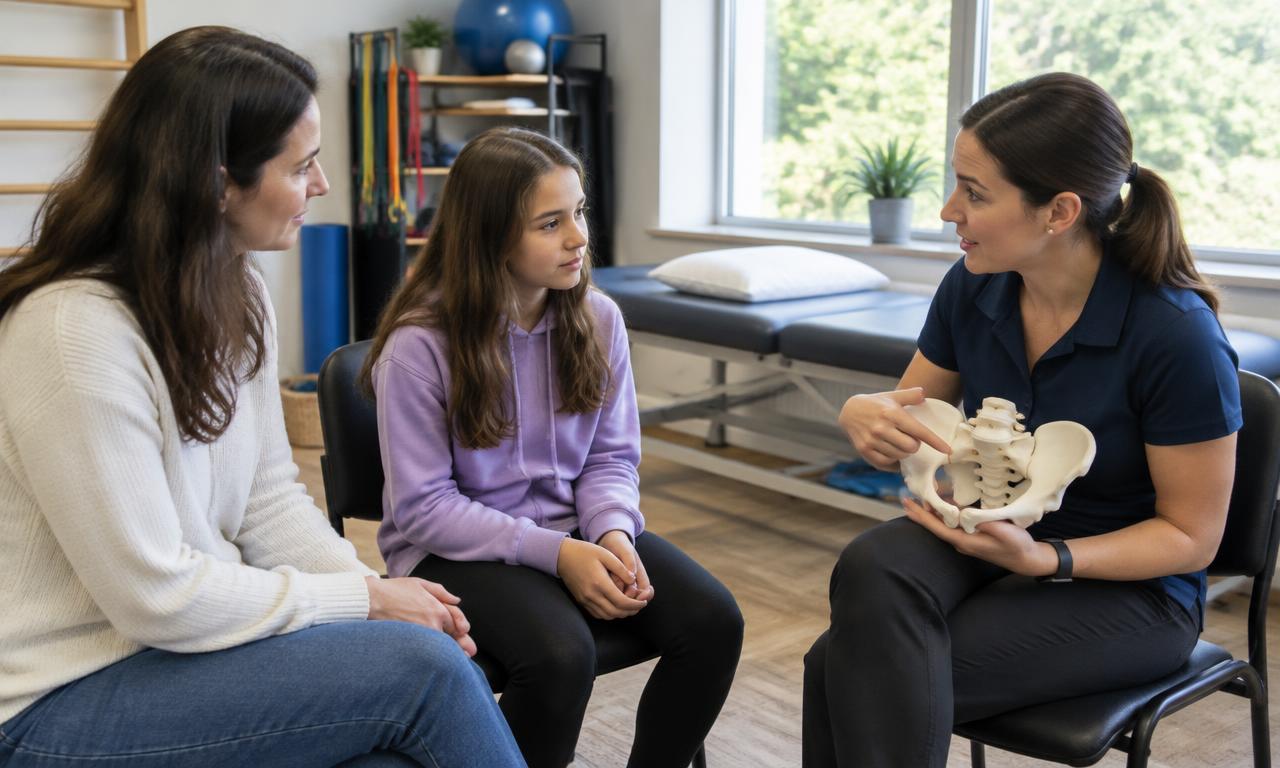
You stay in the room the whole time. We talk about what has been happening, when it started, what you have tried, and how it is affecting school, sleepovers, sports or confidence. I talk to your child directly too, at their level. Older kids and teens often have things to say that they have never said out loud.
What the assessment looks like
- Posture, breathing and how your child sits on the toilet (feet position matters more than most people think)
- Hip, back and abdominal movement, and how the belly and pelvic floor work together
- Real-time ultrasound (RUSI) as biofeedback — a picture on a screen that shows the bladder and pelvic floor working, which kids usually find fascinating
- Gentle external assessment over clothing or the skin, only with your child’s okay
Treatment can be external or internal depending on your child’s presentation. Internal assessment is only considered for older children when it is medically indicated, and only after a thorough discussion with you and your child — and only if everyone is comfortable. Most children are treated entirely externally.
What you leave with
A clear explanation of what I think is going on, written down. A short home plan — usually toilet posture, a drinking and voiding routine, breathing and pelvic floor relaxation, and pressure management for pooping. And a sense of how many visits we are likely to need. Progress is paced to your child: we move forward when they are ready, not before.
Kids do best when they understand their own body. My job on day one is to make it make sense — for them and for you.
Pediatric pelvic health near Montclair
I trained in pediatric bladder and bowel care through Dawn Sandalcidi’s Levels 1 and 2. Our clinic in Upper Montclair sees families from Montclair, Glen Ridge, Verona, Cedar Grove, Little Falls and across Essex and Passaic counties.