Hip Pain That Won’t Go Away? Your Pelvic Floor May Be Part of It
You have stretched your hip flexors, rolled your IT band, done the clamshells. The ache deep in the hip or groin is still there. When hip pain does not behave the way it should, I look one layer deeper — at the muscles that sit inside the pelvis.
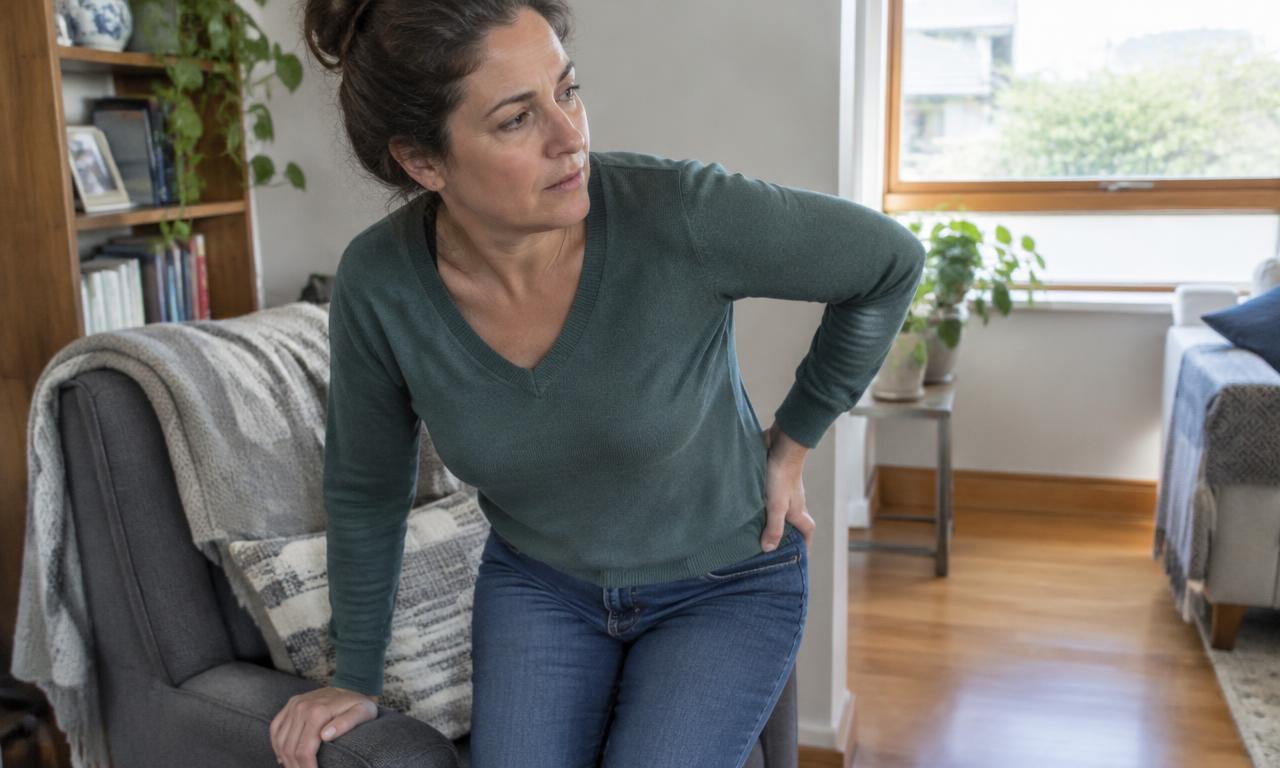
Why the hip and pelvic floor are connected
The obturator internus, one of the deep hip rotators, shares a fascial connection with the pelvic floor. When it is tight or overworking, the pelvic floor often is too — and the reverse. Pain from either can be felt in the hip, the groin, the sit bone or the inner thigh.
Signs your hip pain has a pelvic component
- Deep, hard-to-locate pain in the groin, inner thigh or buttock
- Pain that is worse with sitting, especially on hard chairs
- Bladder urgency, constipation or pain with sex alongside the hip pain
- Hip pain that started during pregnancy or after childbirth
- A labral tear or hip impingement diagnosis where pain persists after treatment or surgery
- Clicking or gripping in the hip with a sense that you can never fully relax
How I assess it
I look at hip strength and range, how you walk, squat and balance, and how your breathing and pressure management work under load. I check the deep hip rotators and, with your consent, the pelvic floor itself — externally, internally, or with real-time ultrasound (RUSI) as biofeedback so you can see the muscles working on screen.
What treatment looks like
Hands-on release of the deep hip and pelvic muscles, pelvic floor relaxation and lengthening, hip strengthening that does not feed the gripping pattern, and changes to how you sit and stand at work. Most people need both sides addressed: the hip and the pelvis.
If your hip pain hasn’t moved after months of hip exercises, the hip may not be the whole problem.