Back to all articlesOrthopedic

    Tailbone Pain (Coccydynia): Why Sitting Hurts and What Actually Helps

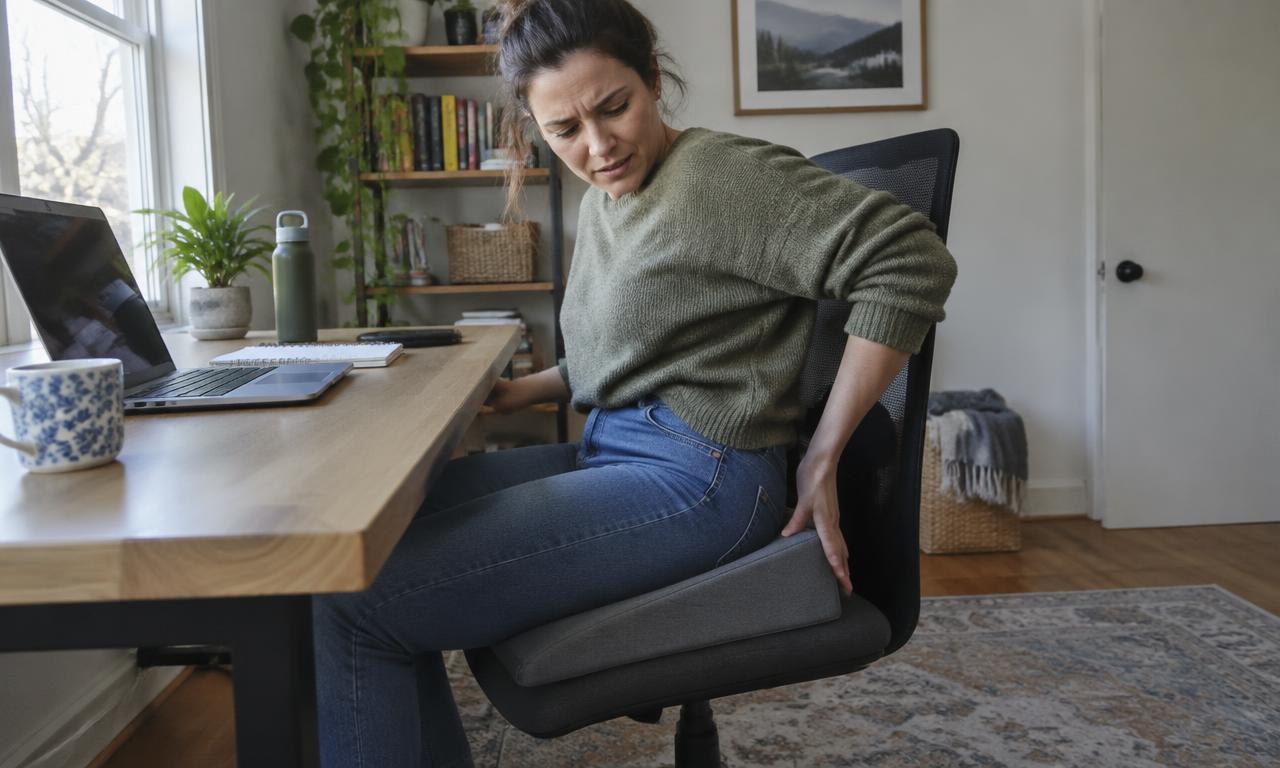
    You sit on the edge of your chair, shift side to side, and brace before you stand up. The donut cushion helps a little. Tailbone pain is one of the most frustrating problems I see — and one of the most treatable once we find what is pulling on it.
    Tailbone Pain (Coccydynia): Why Sitting Hurts and What Actually Helps

    Why the tailbone hurts

    Several pelvic floor muscles attach directly to the coccyx. When they are tight or guarding, they pull on it and keep it irritated every time you sit. A fall, a long labor, a difficult delivery, constipation and straining, or long hours on a hard chair can all start the cycle.

    Common signs

    • Pain right at the tailbone when sitting, especially leaning back
    • A sharp pain when going from sitting to standing
    • Pain with bowel movements or during sex
    • Pain that began after a fall, childbirth or a long car ride
    • X-rays that look “normal” even though it clearly hurts

    How I treat it

    I assess the muscles around the coccyx externally and, if you consent, internally — the internal approach is often the most direct way to release the muscles that attach to the tailbone. We add pelvic floor relaxation and lengthening, breathing, bowel habits that stop the straining, and changes to how you sit at work and in the car.

    Small changes that help right away

    • Use a wedge cushion with a cut-out at the back rather than a donut
    • Sit up on your sit bones, not rolled back onto your tailbone
    • Stand up every 30–45 minutes
    • Avoid straining on the toilet — a footstool under your feet helps

    Questions about your own symptoms? Talk to us before you book.

    Common questions

    Yes. Pelvic floor therapy treats the muscles that attach to the coccyx, which are a common driver of tailbone pain.

    No. It is often the most effective approach, but it is always optional and only done with your consent.

    In my clinical experience, most people can sit better after a few sessions. Individual needs and responses vary, and we adjust your plan based on what we find and how you respond.
    PELVIC PT PLUS

    Pelvic Floor Physical Therapy in Montclair, New Jersey. Offering expert pelvic floor rehab with Real-Time Ultrasound Imaging (RUSI) biofeedback for individualized, one-on-one care.

    @pelvicptplus

    Contact Info

    • 209 Cooper Ave, Suite 5BCD
      Upper Montclair, NJ 07043
    • (908) 955-3534
    • Fax: (844) 306-0840
    • info@pelvicptplus.com
    • Office Hours

      Sun
      Closed
      Mon
      3:00pm – 6:00pm
      Tues
      9:00am – 12:00pm, 12:30pm – 5:30pm
      Wed
      Optional times available on request
      Thurs
      9:00am – 12:00pm, 12:30pm – 5:30pm
      Fri
      Closed
      Sat
      10:00am – 2:00pm

    Billing and Insurance

    Pelvic PT Plus is an out-of-network provider offering 60-minute, one-on-one sessions utilizing Real-Time Ultrasound Imaging (RUSI) biofeedback technology. Payment is accepted via cash, credit card, or HSA/FSA. See more details in FAQs.

    Pelvic Floor Therapy in Upper Montclair (Montclair, Essex County)

    We see patients from these towns:

    Upper Montclair · Montclair · Glen Ridge · Bloomfield · Nutley · Cedar Grove · Verona · West Orange · Caldwell · North Caldwell · Livingston · Little Falls · Clifton · Wayne · Fairfield · Maplewood · South Orange · West Caldwell · Essex Fells · Roseland

    © 2026 PelvicPTplus — Pelvic Floor Therapy in New Jersey. All rights reserved.