Why does my Tailbone Hurt? How do I fix it?
Learn what can contribute to tailbone (coccyx) pain and how pelvic floor physical therapy assesses sitting pain, muscle tension, and movement.
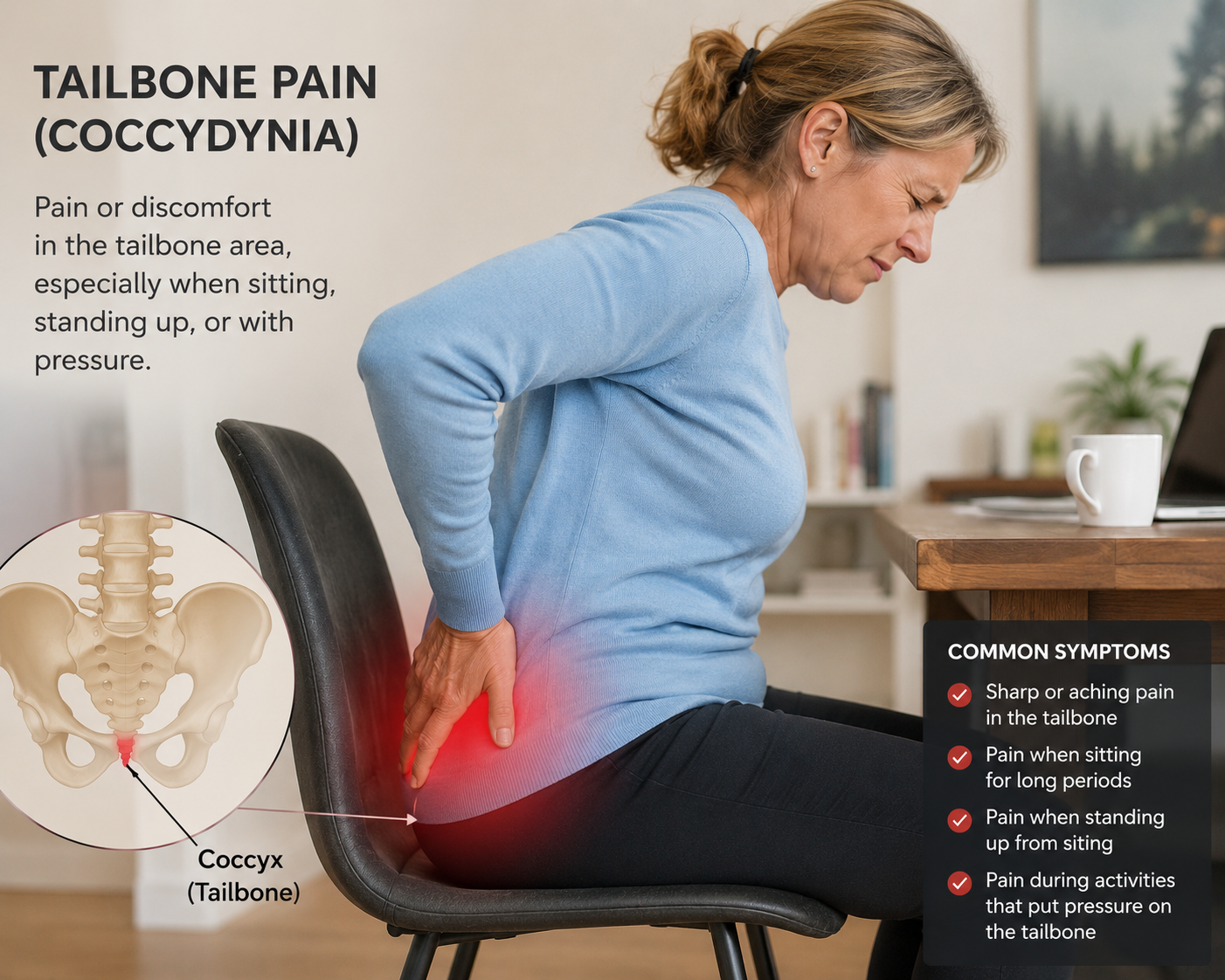
TAILBONE PAIN, COCCYDYNIA & PELVIC FLOOR DYSFUNCTION
WHY SITTING HURTS AND WHAT ACTUALLY HELPS
If you are searching:
“Why does my tailbone hurt?” “Pain in tailbone when sitting” “Sharp pain standing up from sitting” “Tailbone pain after pregnancy” “Burning pain near tailbone” “Coccyx pain relief” “Tailbone pain physical therapy near me”
you are not alone.
Many people with chronic tailbone pain spend months or years trying cushions, injections, chiropractic care, massage, stretching videos, medications, or simply avoiding sitting altogether before realizing the problem may involve much more than the tailbone itself.
At Pelvic PT Plus , we specialize in pelvic floor physical therapy and orthopedic pelvic rehabilitation for chronic tailbone pain, coccyx pain, pain with sitting, postpartum pelvic pain, pelvic floor dysfunction, and persistent pelvic pain throughout Northern New Jersey.
WHY DOES MY TAILBONE HURT WHEN SITTING?
Tailbone pain is one of the most common reasons patients begin searching for pelvic floor physical therapy.
Patients commonly describe:
• Sharp pain in tailbone when sitting • Burning pain near tailbone • Tailbone pain driving • Pain standing up from sitting • Tailbone pain after long sitting • Electric shock feeling in tailbone • Deep ache at bottom of spine • Tailbone pain after childbirth • Pain during bowel movements • Pain during sex • Rectal pressure and tailbone pain
Many people notice they constantly shift positions, lean forward while sitting, sit on one hip, or avoid hard chairs completely just to get through the day.
For some patients, sitting through work meetings, driving, flights, restaurants, or even relaxing at home becomes difficult.
WHAT IS COCCYDYNIA?
Coccydynia is the medical term for tailbone pain.
The coccyx, or tailbone, sits at the very bottom of the spine and acts as an attachment point for pelvic floor muscles, fascia, connective tissue, and ligaments.
Pain can develop after:
• Falling onto the tailbone • Pregnancy and childbirth • Prolonged sitting • Cycling • Weightlifting • Trauma • Pelvic floor dysfunction • Surgery • Repetitive strain • Hypermobility
Some patients develop chronic coccyx pain gradually without any major injury at all.
Learn more about pelvic floor rehabilitation services at Pelvic PT Plus Pelvic Floor Therapy .
Pelvic PT Plus Pelvic Floor Therapy
TAILBONE PAIN AFTER PREGNANCY OR CHILDBIRTH
Tailbone pain postpartum is extremely common but often minimized or dismissed.
Patients may experience:
• Tailbone pain after vaginal delivery • Coccyx pain sitting while breastfeeding • Pain rolling in bed • Rectal pressure postpartum • Pelvic heaviness • Pain with bowel movements • Pain sitting after C section • Pelvic floor tightness • Pain during transitions from sitting to standing
During pregnancy and childbirth, the pelvic floor muscles, ligaments, and coccyx undergo significant stress.
Many postpartum patients come to Pelvic PT Plus Postpartum Recovery months or even years later saying:
Pelvic PT Plus Postpartum Recovery
“I thought it would go away on its own.”
Persistent pain is not something you simply have to live with.
WHY TAILBONE PAIN IS OFTEN MORE THAN JUST THE BONE
Many patients assume the coccyx itself is the only problem.
In reality, chronic tailbone pain frequently involves:
• Pelvic floor muscle tension • Pelvic floor dysfunction • Hip dysfunction • SI joint dysfunction • Core weakness • Breathing dysfunction • Scar tissue restrictions • Nerve irritation • Poor pressure management • Chronic muscle guarding
The pelvic floor muscles attach directly to the coccyx. When those muscles become tight, overactive, or chronically guarded, they may continue pulling on the tailbone and surrounding tissues.
This is one reason imaging can appear “normal” even when patients continue having severe pain.
TAILBONE PAIN AND PELVIC FLOOR DYSFUNCTION
Many patients with coccydynia also experience symptoms of pelvic floor dysfunction.
Common symptoms include:
• Rectal pressure • Constipation • Pain with bowel movements • Painful intercourse • Urinary urgency • Pelvic pain • Hip pain • Low back pain • Pain after sitting • Pelvic floor spasms • Pressure near the rectum • A “golf ball feeling” internally
Pelvic floor dysfunction is commonly overlooked in patients with chronic coccyx pain.
At Pelvic PT Plus Pelvic Pain Treatment , treatment focuses not only on the tailbone itself, but also the surrounding muscles, joints, nerves, posture, breathing mechanics, and movement patterns contributing to symptoms.
Pelvic PT Plus Pelvic Pain Treatment
WHY SITTING MAKES TAILBONE PAIN WORSE
One of the most common Google searches is:
“WHY DOES SITTING MAKE TAILBONE PAIN WORSE?”
The coccyx helps absorb pressure while sitting.
Long periods of desk work, driving, poor posture, leaning backward while sitting, hard chairs, and prolonged pressure can all increase stress on the coccyx and surrounding tissues.
Patients often report:
• Tailbone pain driving • Pain during desk work • Pain during travel • Difficulty sitting through dinner • Constant shifting while sitting • Sharp pain getting out of chairs • Sitting only on one side
Over time, compensatory sitting patterns may further irritate the hips, SI joints, pelvic floor, and lower back.
TAILBONE PAIN RELIEF: WHAT ACTUALLY HELPS?
Patients searching for tailbone pain relief are often frustrated after trying:
• Cushions • Pain medication • Rest • Injections • Chiropractic treatment • Massage • Stretching videos • Standing desks • Acupuncture
While these may temporarily reduce symptoms, lasting improvement often requires identifying WHY the coccyx remains irritated.
For many patients, the missing piece is addressing pelvic floor dysfunction, muscle tension, movement mechanics, breathing patterns, orthopedic dysfunction, and nervous system sensitivity together.
CAN PHYSICAL THERAPY HELP TAILBONE PAIN?
Yes.
Physical therapy for tailbone pain may help address both the coccyx itself and the surrounding pelvic and orthopedic contributors.
At Pelvic PT Plus Physical Therapy Services , treatment may include:
Pelvic PT Plus Physical Therapy Services
• Pelvic floor assessment • Myofascial release • Tailbone mobilization • Pelvic floor downtraining • Core coordination training • Hip and SI joint treatment • Breathing retraining • Postural correction • Sitting mechanics • Nervous system regulation • Scar tissue mobilization • Real time ultrasound imaging
Treatment is individualized because tailbone pain is rarely one size fits all.
WHAT PATIENTS WITH TAILBONE PAIN OFTEN EXPERIENCE
Patients with chronic coccydynia frequently report:
• Feeling dismissed • Being told imaging is normal • Pain lasting for years • Fear of sitting • Avoiding travel • Difficulty working at a desk • Pain during parenting or breastfeeding • Pain after exercise • Sleep disruption • Anxiety around sitting
Many patients begin to feel isolated because tailbone pain affects basic daily activities that other people rarely think about.
FREQUENTLY ASKED QUESTIONS ABOUT TAILBONE PAIN
CAN PELVIC FLOOR DYSFUNCTION CAUSE TAILBONE PAIN?
Yes. Pelvic floor muscle tension and chronic guarding may place stress on the coccyx and surrounding tissues.
WHY DOES MY TAILBONE HURT WHEN I STAND UP?
Many patients experience sharp pain transitioning from sitting to standing because pressure shifts through the coccyx and pelvic floor muscles.
IS TAILBONE PAIN COMMON AFTER CHILDBIRTH?
Yes. Pregnancy and vaginal delivery are common contributors to coccyx pain and pelvic floor dysfunction.
CAN PHYSICAL THERAPY HELP COCCYDYNIA?
Pelvic floor physical therapy may help improve mobility, reduce muscle tension, improve sitting tolerance, and decrease coccyx pain.
WHY DO MY SCANS LOOK NORMAL IF I STILL HAVE PAIN?
Many patients with tailbone pain have muscular, connective tissue, movement related, or pelvic floor dysfunction that does not clearly appear on imaging.
PELVIC FLOOR PT NEAR ME FOR TAILBONE PAIN IN NEW JERSEY
If you are searching for:
Tailbone pain physical therapy near me Coccyx pain treatment NJ Pelvic floor PT near me Tailbone pain after pregnancy Pain with sitting treatment Chronic tailbone pain help Pelvic floor dysfunction treatment Coccydynia physical therapy
Pelvic PT Plus in Upper Montclair NJ 07043 provides specialized one on one pelvic floor rehabilitation for tailbone pain, pelvic floor dysfunction, pelvic pain, postpartum recovery, bladder dysfunction, bowel dysfunction, orthopedic pelvic conditions, and chronic sitting pain.
Pelvic PT Plus in Upper Montclair NJ 07043
Office Location
Pelvic PT Plus Upper Montclair NJ
Pelvic PT Plus Upper Montclair NJ
You do not have to keep living with pain every time you sit down.
Your symptoms are real. Your pelvic floor matters. And treatment options exist.