A Safe, Judgment-Free Space
We understand how difficult it can be to talk about sexual pain. Our practice provides a compassionate, confidential environment where you can discuss your concerns openly and receive expert care.
Understanding Painful Intercourse
Pain during sex is one of the most common — and least talked about — pelvic floor problems we treat. Whether it's been there since your first attempt at penetration (vaginismus), developed over time (dyspareunia), or comes with burning and rawness that has no visible cause (vulvodynia), sexual pain is real, physical, and treatable. It is not in your head.
The pelvic floor muscles surround the vaginal opening and play a direct role in penetration. When those muscles are tight, guarded, or uncoordinated — from trauma, surgery, infection, endometriosis, menopause, or simply anxiety that pain will happen again — penetration hurts. The body learns to brace, the bracing causes more pain, and the cycle continues. Breaking that cycle is exactly what pelvic floor physical therapy does.
If you've been looking for dyspareunia treatment, vaginismus treatment, or vulvodynia treatment in New Jersey, you don't need to suffer in silence or hope it goes away on its own. We see patients from Montclair and across North Jersey, and we help them restore comfort and intimacy at their own pace.
Signs & Symptoms
If you experience any of these, pelvic floor physical therapy can help:
- • Pain at the vaginal opening or deep in the pelvis during penetration
- • Inability to tolerate penetration at all — the muscles clench involuntarily (vaginismus)
- • Burning, stinging, or rawness at the vulva without an infection (vulvodynia)
- • Pain that started after childbirth, surgery, or menopause
- • Pain that has been present since your first attempt at intercourse (primary vaginismus)
- • Fear or anxiety about pain before intimacy even begins
- • Avoiding intimacy because of the pain
- • Pain with tampon insertion or pelvic exams
How I Treat Painful Intercourse
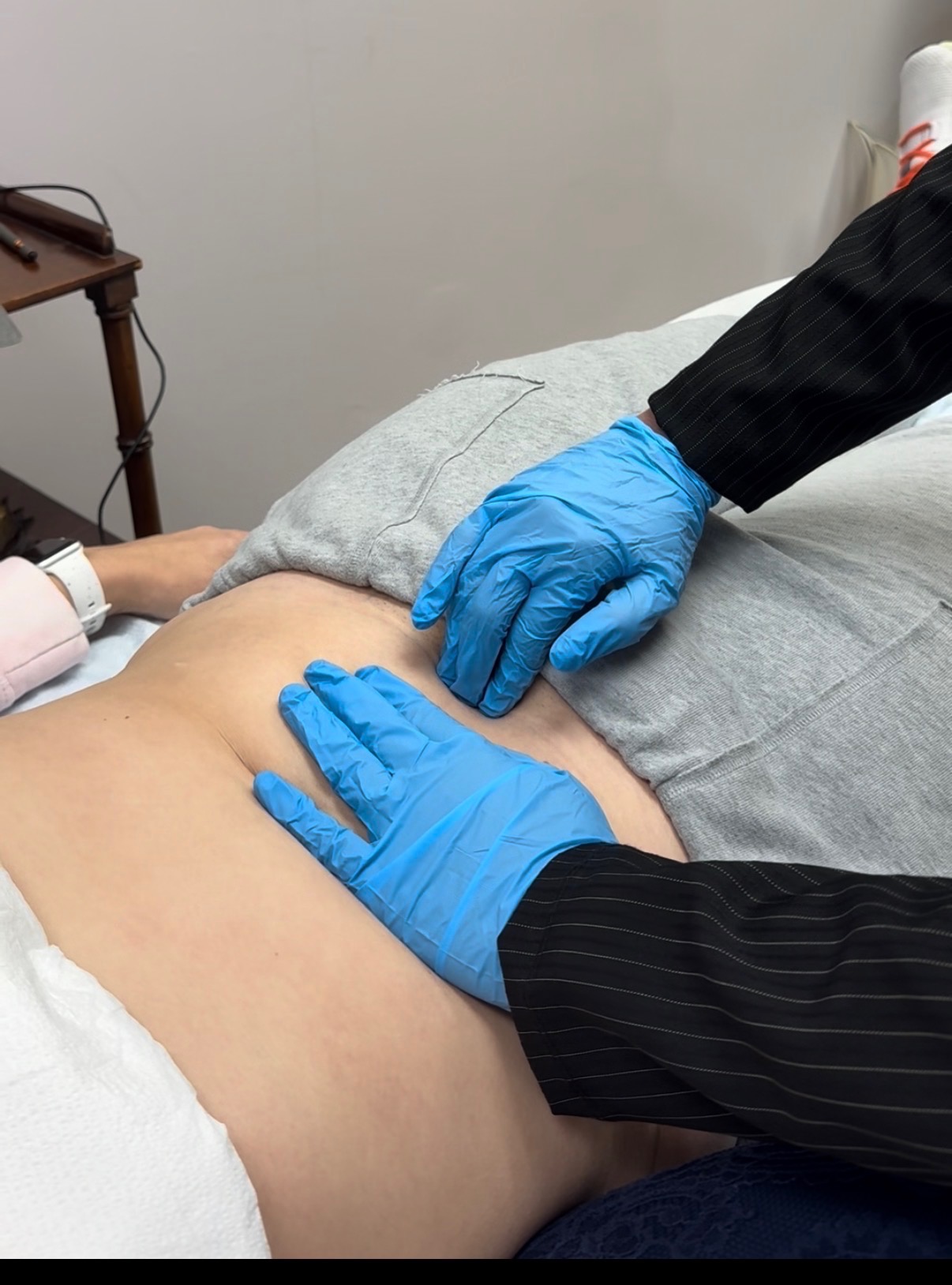
This is some of the most rewarding work I do — because the relief is life-changing. Your evaluation is thorough but never rushed. I take a detailed history of when the pain started, what makes it better or worse, and what you've already tried. An external and, if you consent, internal pelvic floor exam helps me identify tight bands of muscle, trigger points, and scar tissue that are driving the pain.
Treatment is gentle and progressive. We start with external soft tissue work, breathing, and desensitization, then move at your pace to internal myofascial release, trigger point therapy, and progressive dilation or pelvic floor down-training. Real-time ultrasound imaging (RUSI) biofeedback helps you see your muscles relax — because many people don't realize how much they're holding on. Every step is with your consent, at your comfort level.
See real ultrasound biofeedback in action on Instagram @pelvicptplusConditions We Treat
Sexual pain has many causes — and physical therapy can help with most of them. We take a whole-person approach to identify and treat the source of your pain.
Vulvodynia & Vestibulodynia
Chronic vulvar pain or burning at the vaginal opening. We use desensitization techniques, manual therapy, and progressive dilation to reduce pain.
Vaginismus
Involuntary tightening of pelvic floor muscles that makes penetration painful or impossible. Gradual, gentle therapy helps retrain the muscles to relax.
Dyspareunia
Pain during or after intercourse caused by muscle tension, scar tissue, hormonal changes, or nerve sensitivity. We identify and treat the underlying cause.
Post-Surgical Pain
Pain after hysterectomy, episiotomy, perineal tears, or other gynecological procedures. Scar tissue mobilization and pelvic floor rehabilitation restore comfort.
Endometriosis-Related Pain
Deep pain during intercourse associated with endometriosis. Complementary pelvic floor therapy reduces muscle guarding and central sensitization.
Menopausal Sexual Pain
Dryness, thinning tissues, and decreased elasticity during perimenopause and menopause. Targeted therapy improves tissue health and pelvic floor flexibility.
What Our Patients Say
Before finding Dr. Tanvi’s practice, I knew very little about the pelvic floor or pelvic floor physical therapy—and I wish I had met her much earlier in my life. After years of pain and extreme anxiety around OB-GYN exams, she put me at ease from the very beginning. Dr. Tanvi listens with genuine compassion and kindness, and she has taught me so much about my body. After four months of working with her, the progress has been incredible, and I feel so much more comfortable and confident in my own skin. She truly goes above and beyond for her patients, and I’m deeply grateful for everything she has done for me. I highly recommend Dr. Tanvi to anyone seeking pelvic floor physical therapy.
— RD, Google review
How Pelvic Floor PT Helps
Identify the Cause
Thorough assessment of muscles, nerves, tissues, and contributing factors.
Release & Retrain
Manual therapy, stretching, relaxation techniques, and progressive desensitization.
Restore Confidence
Gradual return to comfortable intimacy with ongoing support and guidance.
Frequently Asked Questions About Painful Intercourse
Research and further reading
Multimodal physical therapy for provoked vestibulodynia
In a randomized trial of 212 women, a 10-week program combining education, pelvic floor exercise with biofeedback, manual therapy and dilation reduced pain during intercourse more than overnight topical lidocaine. Benefits were maintained at six months.
Participants had provoked vestibulodynia—pain at the vaginal entrance triggered by touch or penetration. The findings do not automatically apply to every cause of painful sex. Treatment choices, including any internal techniques, remain individualized and consent-based.
Morin M et al. Am J Obstet Gynecol. 2021;224:189.e1–189.e12 (published online in 2020).How certain is the evidence for provoked vulvodynia treatment?
This systematic review found low-certainty support for multimodal physiotherapy compared with lidocaine for pain during intercourse and sexual function.
Most other treatment comparisons had very-low-certainty evidence. A promising trial is useful, but the broader evidence still needs strengthening.
Bohm-Starke N et al. J Sex Med. 2022;19:789–808.Related Articles
Learn more about this condition from our blog
Free Guides You Can Start Using Today
Tell us where to send it and the PDF is yours right away — it downloads instantly and lands in your inbox too.
Pleasure Without Pain
A compassionate guide to overcoming pelvic pain and rebuilding comfort with intimacy.
Vagercise
Quality kegels done right — learn the correct technique for effective pelvic floor exercises. Most people are doing them wrong.
What You Can Expect From Us
You are heard.
A full hour, one-on-one with Dr. Tanvi. Your story matters, and you will never feel rushed.
You understand your body.
We explain what is happening in plain language, so you know why each step of your plan matters.
Care that looks deeper.
We look at you as a whole person, not a list of symptoms, and work toward the root cause.
"She takes the time to explain the root cause of your issue clearly, so you actually understand what's going on."